Enterprise SEO Strategy: The Complete Guide for Scaling Organic Growth
Building a successful enterprise SEO strategy is important for huge businesses that need to grow their online visibility, attract qualified leads and keep long-term growth in competitive search results. Unlike traditional SEO, enterprise SEO concentrate on handling immense websites with numerous pages, complicated site framework and broad target audiences. Businesses financing in orgnaic search optimization often acquire stronger organic growth and prolonged search visibility.
Today, enterprise companies cannot depend only on paid advertising to build leads. Organic search persists to provide worthy traffic with stronger conversion potential evaluated to multiple traditional marketing technique. Businesses that spend in advanced SEO strategies usually create sustainable growth while lowering long-term customer acquisition costs.
However, enterprise SEO is far more complicated than optimizing a tiny business website. It needs an integration of technical SEO, content strategy, internal linking, semantic optimization and authority building to challenge efficiently in search engines.
What Is Enterprise SEO?
Enterprise SEO indicates search engine optimization strategies developed particularly for large-scale websites and organizations. These websites generally include hundreds or thousands of pages focusing on numerous products, services, categories or locations.
The main objective of enterprise SEO is to enhance search visibility over a huge range of keywords while keeping scalability and technical efficiency.
Enterprise SEO commonly involves:
• Large-scale keyword targeting • Technical optimization • Advanced content management • Internal linking systems • Authority-focused link building • Automation and workflow management • Multi-team collaboration
Because enterprise websites proceed growing as the passage of time, SEO must stay scalable and organized.
Why Enterprise SEO Is Important
Huge businesses compete in extremely competitive search environments where even minor ranking advancements can create crucial traffic and revenue gains.
A organized enterprise SEO strategy assists businesses:
Search engines now focus on websites that show expertise, authority and trustworthiness. Enterprise brands that continuously publish qualified content and keep strong technical execution usually acquire sustainable ranking improvement.
Analyzing search fluctuations is also important for large websites. Google updates repeatedly affect rankings throught industries. Businesses tracking SERP volatility in SEO can better recognize ranking uncertainty and acknowledge instantly before dropping useful traffic.
Enterprise SEO vs Traditional SEO
Although both approaches targets to enhance search visibility, enterprise SEO functions on a much wider scale.
Traditional SEO often focuses on:
• Tiny websites • Local keywords • Restricted content production • Easy site structures
Enterprise SEO focuses on:
• Numerous pages • National or worldwide audiences • Complicated website architecture • Many stakeholders and teams • latest automation and reporting
Enterprise websites must also handle crawl budget, indexing efficiency and large-scale content optimization more precisely than tiny websites.
Keyword Research for Enterprise SEO
Keyword research is the base of every successful SEO campaign. Enterprise businesses must recognize keywords with powerful search demand while analyzing user intent throughout Multiple stages of the customer journey.
Rather than targeting only broad keywords, enterprise websites must Concentarte on:
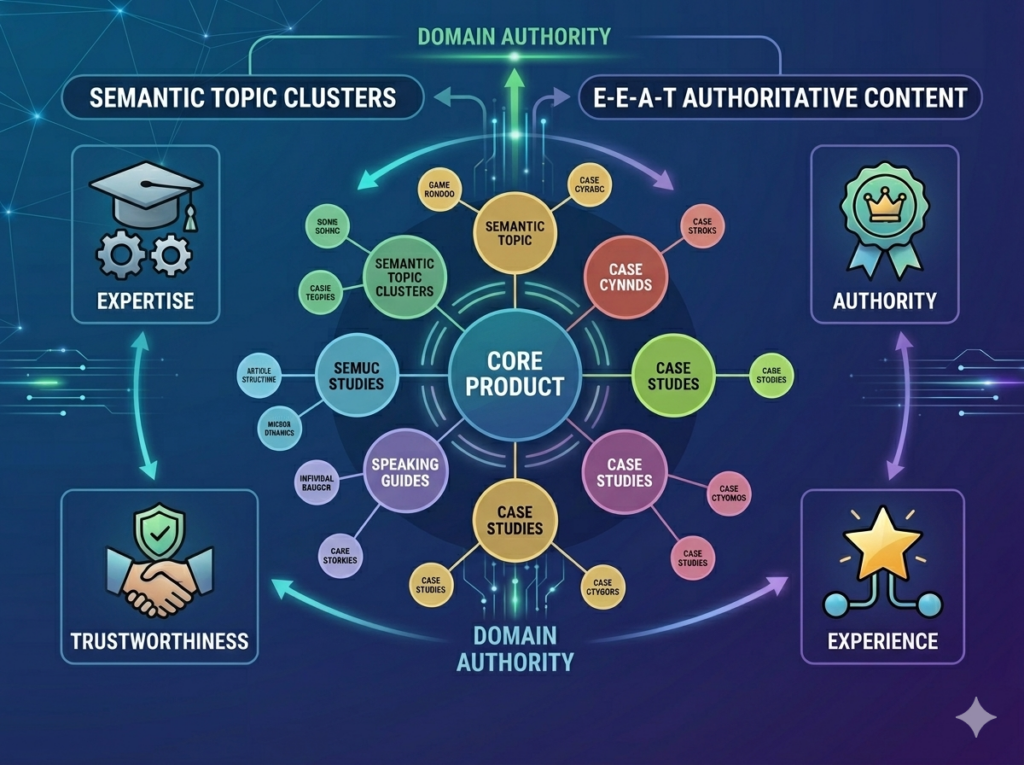
Latest SEO also depend strongly on topical relevance. Many successful enterprise brands now utilises semantic clustering in SEO to gather similar topics together and create stronger topical authority.
Semantic clustering lets search engines recognize relationships among pages, improving rankings for broader keyword groups rather than single keywords only.
High-Quality Content Is Essential
Content is one of the Powerful ranking elements in SEO. Enterprise websites must continuously publish valuable, authoritative and well-organized content that meets user intent.
High-quality content must:
• Fix user problems • Give precise information • Shows expertise • Involve proper structure and formatting • Apply natural keyword placement • Keep content readable
Google’s E-E-A-T framework (Experience, Expertise, Authority and Trustworthiness) has become crucially significant for ranking competitive content.
Rather of, businesses must concentrate on Building comprehensive content assets that offer real value to users
Technical SEO for Enterprise Websites
Technical SEO participates in a critical part in enterprise-level optimization. Large websites often face indexing, crawlability and performance problems that can directly affect rankings.
Important technical SEO parts include:
Site Speed Optimization
Fast-loading websites enhance both user experience and search performance. Slow websites usually experience:
Google uses mobile-first indexing, meaning mobile performance directly impacts rankings. Enterprise websites must ensure responsive design and mobile usability thgrough all devices.
Structured Data
Structured data lets search engines clearly understand website content and might improve presence via rich snippets.
Crawl Budget Management
Large websites must ensure search engines effectively crawl critical pages without wasting resources on low-value URLs.Businesses need to increase technical performance and must understand what technical SEO is and how it help scalability for enterprise websites.
Internal Linking Strategy
Internal linking is one of the most neglected SEO techniques for large websites.
A strong internal linking strategy assists the following:
• Deliver authority across pages • Enhance crawlability • Improve topical relevance • Grow page discoverability • Improve user navigation
Enterprise websites must build logical topic clusters that link related content organically.
Anchor texts must be descriptive and related while letting users discover more valubale resources.
Link Building for Enterprise SEO
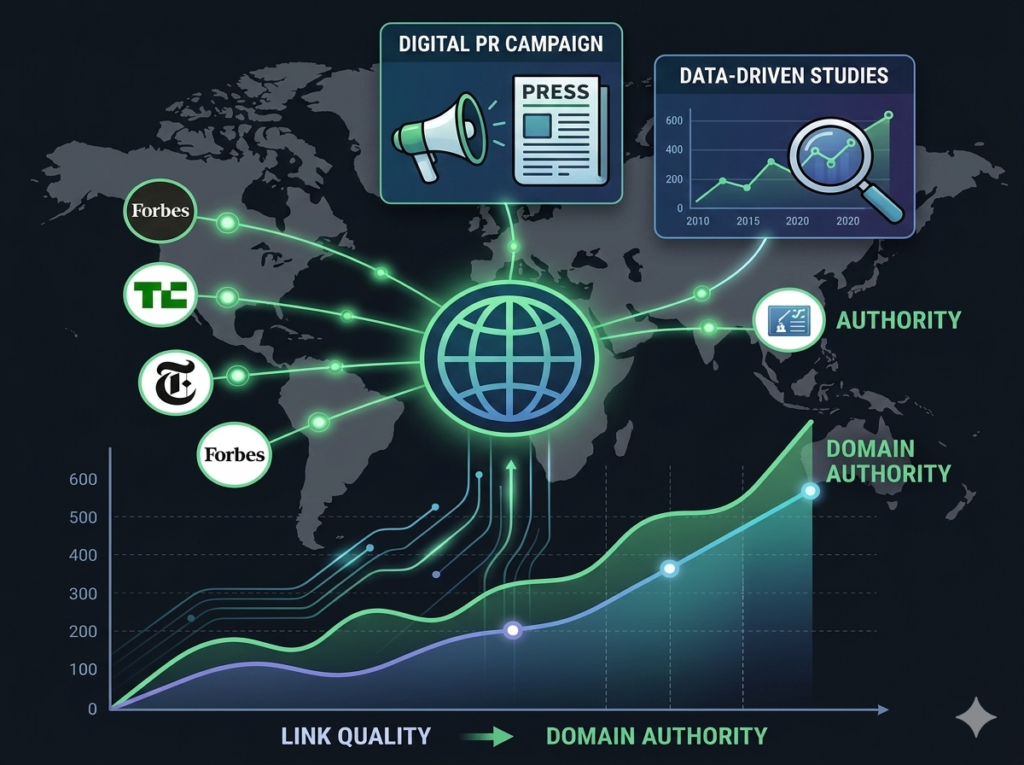
Backlinks is a major ranking factor in Google’s algorithm. However, enterprise businesses should emphasize quality over quantity.
The most efficient link-building strategies involve:
• Digital PR campaigns • Data-driven studies • Industry partnerships • Top-Notch guest posting • Thought leadership content • Resource page outreach
Natural backlinks from authoritative websites easily grow domain authority and enhance rankings over a large keyword groups.
Content Diversification and Multi-Channel SEO
Latest SEO lengthens beyond traditional blog content. Enterprise brands must diversify content formats to increase reach and engagement.
Well-known content formats include:
• Videos • Infographics • Whitepapers • Case studies • Webinars • Podcasts • Social content
Social search optimization is also becoming more significant. Businesses enhancing Instagram SEO captions can reinforce presence over social platforms while rising overall brand discovery.
Final Thoughts
A successful enterprise SEO strategy requires a combination of technical optimization, scalable content systems, semantic relevance and authority building. Large websites that invest in long-term SEO processes often achieve stronger visibility, higher-quality traffic and sustainable growth over time.
As search algorithms continue evolving, enterprise brands must focus on user experience, topical authority and technical excellence to remain competitive. Businesses that continuously improve their SEO infrastructure and adapt to industry changes will have a significant advantage in organic search results.
FAQS- Enterprise SEO Strategy
Q 1: What is an enterprise SEO strategy?
An enterprise SEO strategy is a structured approach used by large businesses to improve search visibility, manage large websites and drive scalable organic traffic through technical SEO, content and link building.
Q 2: Why is enterprise SEO important for large businesses?
Enterprise SEO is important because it helps large businesses increase organic traffic, improve brand visibility and generate high-quality leads in highly competitive markets.
Q 3: How is enterprise SEO different from traditional SEO?
Enterprise SEO focuses on large websites, complex structures and scalable systems, while traditional SEO is usually used for smaller websites with fewer pages and simpler optimization needs.
Q 4: What are the key components of an enterprise SEO strategy?
The key components include technical SEO, content strategy, keyword research, internal linking and high-quality link building to improve overall search performance.
Q 5: How long does it take to see results from enterprise SEO?
Results from enterprise SEO usually take 3–6 months depending on competition, website size, content quality and technical optimization improvements.