Amazon Search Algorithm Explained: How to Rank Higher and Increase Sales?
The Amazon Search Algorithm determines which products get visiblity first when shoppers search on Amazon. If you sell on the marketplace, analyzing how this system actually works can assist your product presence, attract more authorized buyers, and grow sales. Unlike traditional search engines that give priority to informational content, Amazon concentrates on displaying products that are most likely to drive purchases. By improving your listings, boosting customer experience, and following Amazon SEO best practices, sellers can acquire powerful rankings and sustainable growth in one of the world’s most chaleenging marketplaces.
What Is the Amazon Search Algorithm?
The Amazon Search Algorithm is the system Amazon uses to analyze, rank, and show products based on a shopper’s search query. Its primary goal is to give customers with the most relevant products while increasing the likelihood of a successful purchase.
Every product listing struggles for visibility. The algorithm evaluates multiple ranking signals, including keyword relevance, sales performance, pricing, customer reviews, click-through rate, conversion rate, and seller performance. Listings that repeadtedly satisfy customers are more likely to rank higher positions in search results.
Although Amazon constantly updates its ranking mechanism, its overall goal stays the same: helping shoppers rapidly get products that align with their requirements.
Why Amazon SEO Matters
Most Amazon shoppers hardly browse beyond the first page of search results. Products that look at the top get more clicks and sales than lower-ranked listings.
A properly optimized listing can repeatedly drive sales over time without dependency entirely on sponsored campaigns.
Key Factors That Influence Amazon Rankings
Keyword Optimization
Keywords remain one of the powerful ranking signals. Research terms your customers actually search for and naturally include them in your product title, bullet points, description, and backend search terms.
Prevent keyword stuffing. Rather, write content that is both informative and easy to read.
Product Title
Your title must clearly desribe what the product is while involving your primary keyword where suitable.
An effective title generally involves:
• Brand Name • Product name • Important features • Size or quantity • Color (if applicable)
Clear and descriptive titles increase both rankings and click-through rates.
High-Quality Images
Images highly influence buying decisions. use professional, high-resolution images that display your product from different angles.
Include lifestyle images, close-up details, packaging photos, and infographics whenever possible to let customers understand the product before buying.
Product Description and Bullet Points
Your description must reply to common customer queries while specifying key benefits rather than just listing specifications.
Bullet points should focus on:
• Main features • Product benefits • Materials • Dimensions • Usage instructions • Warranty information
Properly written copy grows buyer confidence and increases conversion rates.
Customer Reviews and Ratings
Positive reviews drive trust and directly affect buying decisions.
Encourage satisfied customers to give honest reviews while offering excellent customer service before and after each sale.
Respond professionally to customer concerns and improve product quality on behalf of feedback.
Conversion Rate Matters
Amazon rewards listings that repeatedly convert visitors into actual buyers.
Higher conversion rates signal that shoppers find your listing valuable.
Inventory Management
Running out of stock can negatively affect your rankings. Amazon prefers products that are consistently available for purchase.
Monitor inventory levels continuously and plan ahead during seasonal demand rises to avoid losing useful search visibility.
Seller Performance
Your seller metrics impact overall ranking.
Maintain:
• Least cancellation rates • Frequent response times • Best customer support • Proper product information
• Fast order fulfillment
A trusted seller account builds credibility with both Amazon and customers.
External Traffic Can Improve Visibility
Driving visitors from outside Amazon can help increase product awareness and generate additional sales.
Useful traffic sources include:
• Google Search • Blog Content • Social media platforms • Email marketing • YouTube • Influencer Patenership
A stable marketing approach supports long-term business growth.
Businesses looking to grow their Amazon operations can also benefit from professional Amazon Virtual Assistant Services, which handle listings, keyword optimization, inventory, customer support, and account performance more effectively.
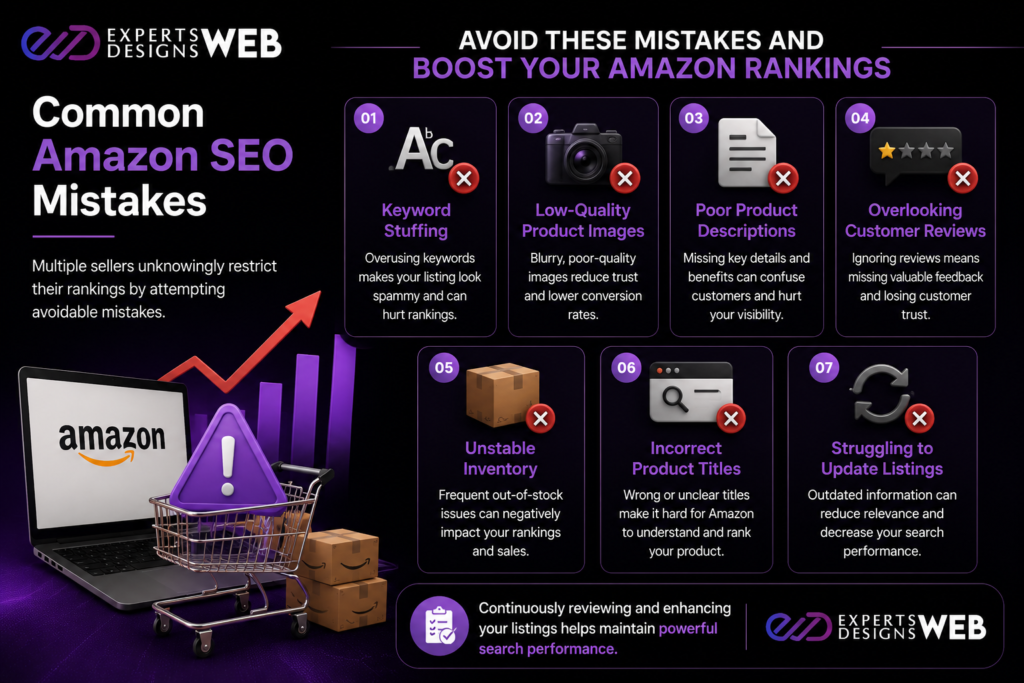
Common Amazon SEO Mistakes
Multiple sellers unknowingly restrict their rankings by attempting avoidable mistakes.
continuously reviewing and enhancing your listings helps maintain powerful search performance.
Best Practices for Long-Term Success
Successful Amazon sellers focus on regular optimization instead of single time improvements.
Handle your product performance, contemplate competitor listings, update keywords, improve images, test pricing strategies, and refine product content on the behalf of customer behavior.
Collaborating with an skilled eCommerce SEO Agency can also help businesses create effective Amazon optimization approaches that leads to visibility, increase organic traffic, and support sustainable sales growth.
FAQs - Amazon Search Algorithm
1. What is the Amazon Search Algorithm?
The Amazon Search Algorithm is a system that ranks products in search results based on factors like keyword relevance, sales history, conversion rate, customer reviews, pricing, and seller performance.
2. How can I improve my product ranking on Amazon?
You can improve Amazon rankings by optimizing product titles, using relevant keywords, adding high-quality images, improving product descriptions, collecting positive reviews, maintaining inventory, and increasing conversion rates.
3. Do Amazon keywords affect product rankings?
Yes, keywords play an important role in Amazon SEO. Using relevant search terms in product titles, bullet points, descriptions, and backend keywords helps Amazon understand your product and show it to the right customers.
4. Are customer reviews important for Amazon rankings?
Yes, customer reviews and ratings influence buyer trust and product performance. Products with positive reviews usually have better conversion rates, which can support higher rankings in Amazon search result
5. Is Amazon SEO different from Google SEO?
Yes, Amazon SEO focuses mainly on product sales and purchase intent, while Google SEO focuses on providing informational and relevant content. Amazon prioritizes factors like conversions, product relevance, reviews, and sales performance
Conclusion
Understanding the Amazon Search Algorithm is essential for any seller who wants to increase visibility and drive more sales. Strong keyword optimization, high-quality product listings, positive customer reviews, competitive pricing, and excellent seller performance all contribute to better rankings. Rather than relying solely on paid advertising, focus on creating an optimized shopping experience that delivers value to customers. As Amazon continues evolving, businesses that consistently improve their listings and follow SEO best practices will be better positioned for sustainable success and long-term growth.